When Drugs Talk to Each Other… and Sometimes, Not Politely

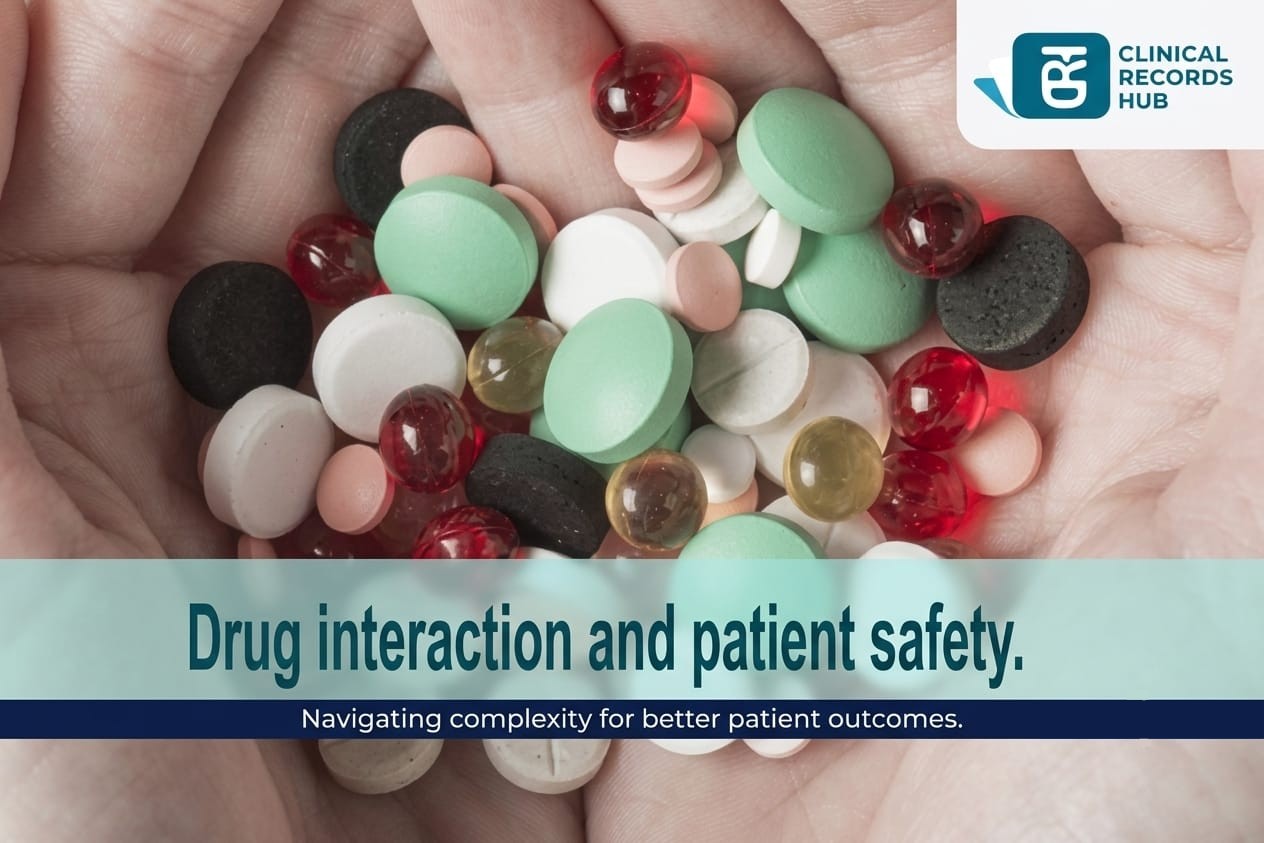
Imagine this. A few days after a successful hip replacement surgery, Mr. Adams returned home with a prescription for an anticoagulant to reduce his risk of blood clots. Everything was going well until he developed a persistent headache.
Rather than returning to the hospital, he stopped at a nearby pharmacy and bought aspirin, a drug he had used countless times before.
By the next morning, he was in the emergency department with severe gastrointestinal bleeding.
Neither medication was prescribed incorrectly. Neither was inherently dangerous, both are common drugs available for use at any turn.
The danger lay in the conversation they had once they met inside his body.
Unfortunately, Mr. Adams was blissfully unaware of it.
It might sound dramatic to say that medicines "talk" to each other, but in many ways, they do. Once inside the body, drugs are constantly interacting, not only with organs and enzymes, but with other medicines, foods, and even existing medical conditions.
The Different Ways Drugs Interact
Not every drug interaction is dangerous, and not every interaction happens between two drugs. Sometimes drugs interact with another, sometimes with food or with the patient's existing medical condition.
1. Drug–Drug Interactions
This is the interaction most people are familiar with. It occurs when one medicine changes the effect of another. Sometimes the combination makes a drug stronger than intended, increasing the risk of side effects. Other times, it weakens a drug, making treatment less effective.
In many cases, these interactions occur because one medicine affects how the other is absorbed, metabolized, or eliminated often through liver enzymes such as the cytochrome P450 (CYP450) system.
For example - After a hip replacement, a patient is prescribed apixaban, an anticoagulant to prevent blood clots. A few days later, they develop joint pain and take aspirin, unaware that both medicines reduce the body's ability to stop bleeding. Together, they significantly increase the risk of gastrointestinal bleeding, turning two appropriate medications into a potentially dangerous combination.
2. Drug–Disease Interactions
A drug–disease interaction occurs when a medication worsens an existing medical condition or triggers symptoms that make the disease harder to control.
For example - An asthmatic patient develops a migraine and takes aspirin for relief. In people with aspirin-sensitive asthma, aspirin blocks the cyclooxygenase (COX) pathway, causing the body to produce chemical mediators that narrow the airways. Within hours, what started as a simple headache can progress to wheezing, shortness of breath, and an asthma attack. The medication wasn't inappropriate for the headache, but it was inappropriate for the patient.
3. Drug–Food Interactions
Medicines can also react with certain foods and drinks. Some foods reduce how well a medicine is absorbed, while others increase its effects or alter the way it is broken down in the liver.
For example - A patient taking warfarin to prevent blood clots suddenly decides to eat large amounts of leafy green vegetables as part of a new healthy diet. Now since these vegetables are rich in vitamin K, they can reduce warfarin's anticoagulant effect, making the medication less effective and increasing the risk of clot formation.
Although these interactions happen in different ways, they all have one thing in common: they depend on information.
A clinician can only prevent a dangerous interaction if they know every medicine, supplement, allergy, medical condition, and relevant dietary habit a patient has. When that information is scattered across paper records, different hospitals, or simply left unspoken, dangerous interactions become much easier to miss.
Why Drug Interactions Are Still Missed
Drug interactions are not missed because healthcare professionals lack knowledge. On the contrary, clinicians, pharmacists, and other healthcare providers spend years learning pharmacology and medication safety. The challenge is that identifying an interaction depends on having the complete picture, and in everyday clinical practice, that picture is often incomplete.
Patients rarely receive all of their care in one place. A person may visit a cardiologist for hypertension, an orthopedic surgeon after a fracture, a general practitioner for routine care, and a community pharmacy for over-the-counter medications.
They may also take herbal remedies, nutritional supplements, or medicines recommended by friends and family. Each decision may seem harmless in isolation, but together they create a complex medication history that no single healthcare professional may fully see.
This is where fragmented care becomes a patient safety issue. When medication histories are incomplete, allergies are undocumented, or previous prescriptions are unavailable, clinicians make decisions with missing information. A medicine that appears appropriate on its own may become dangerous when combined with another drug the clinician most likely never knew the patient was taking.
Perhaps the most concerning reality is that many of these interactions are preventable. They occur not because medicine lacks the knowledge to predict them, but because healthcare systems often struggle to connect the right information to the right clinician at the right time. In medication safety, one undocumented prescription, one forgotten allergy, or one missing piece of history can be enough to change the outcome of an otherwise routine consultation.
As healthcare becomes increasingly specialized, patients are seeing more clinicians, taking more medications, and navigating more complex treatment plans than ever before. This makes medication safety not just a matter of good prescribing, but of complete information, coordinated care, and constant vigilance.
Drug interactions simply proves that: medicines do not exist in isolation, and neither should the decisions surrounding them.
So the next time a medication is prescribed, maybe the most important question isn't "Is this the right drug?" but "What else is this drug about to meet?" because sometimes, the most dangerous conversation in healthcare is the one no one knows was happening, the not so polite drug chat.
You should also read:
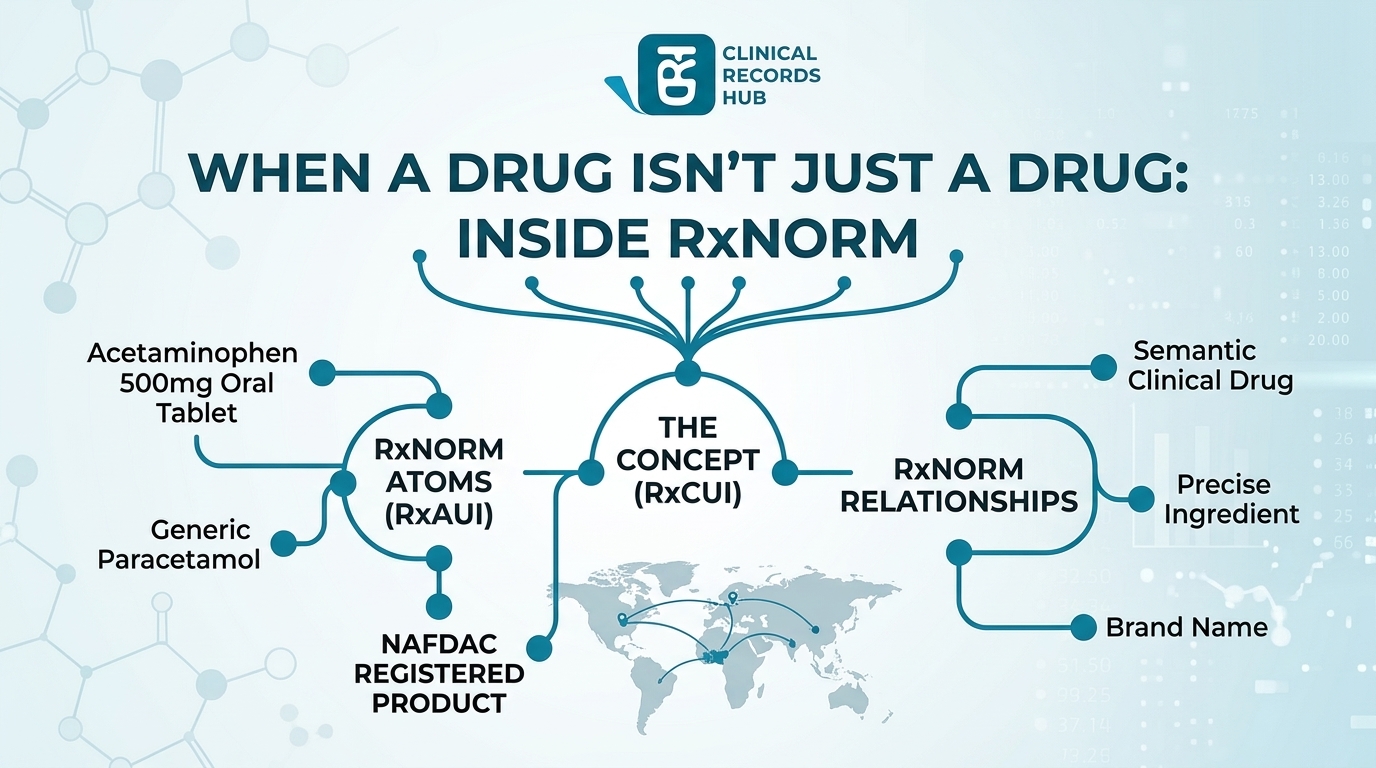
When a Drug Isn’t Just a Drug: Inside RxNorm
A medication may have a brand name, a generic name, a source-specific name, and even different generic names depending on where it is used. For usability in public health research and direct patient care, treating all of these as ordinary strings creates a surprisingly difficult…
Continue reading...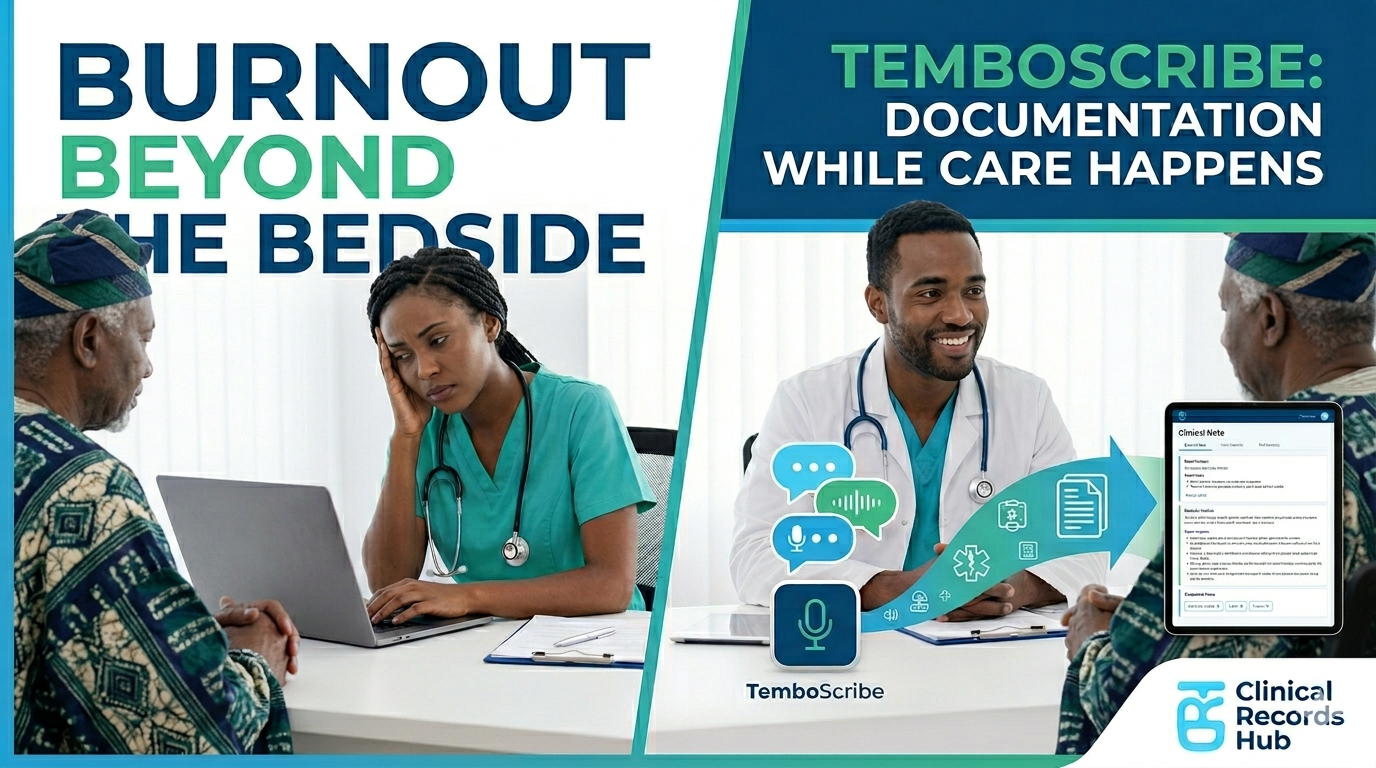
BURNOUT BEYOND THE BEDSIDE: WHEN DOCUMENTATION BECOMES EXHAUSTION
Every patient deserves the clinician’s full attention but symptoms need to be recorded, investigations need to be requested, progress notes need to be written, treatment plans need to be captured, forms need to be completed and compliance requirements need to be met. Therefore, at the…
Continue reading...
Comments