The Patient’s Story is Only As Good As Its Documentation

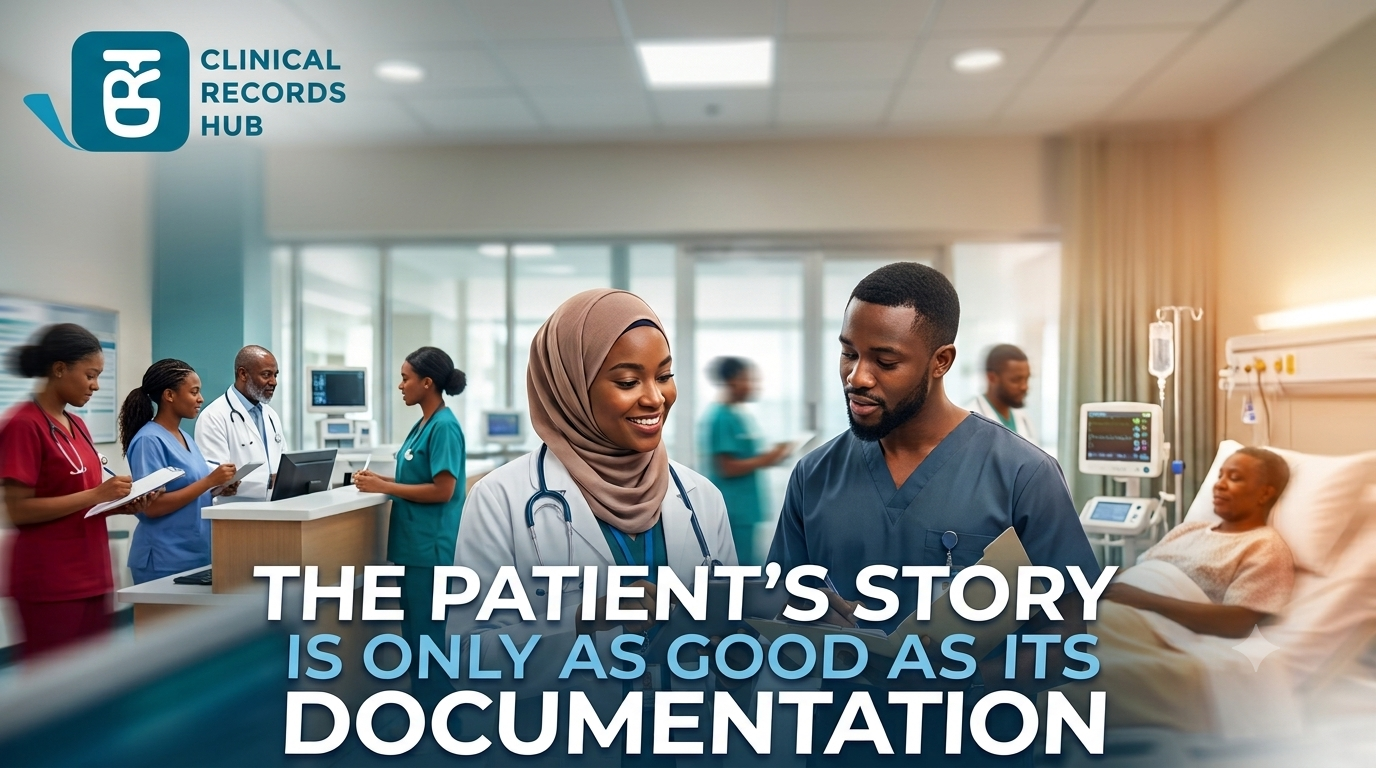
The Patient’s Story is Only As Good As Its Documentation
Every patient encounter has a narrative not just about what happened but why it happened, what changed, what improved, what worsened and what should happen next. That narrative is carried through Clinical documentation.
When documentation is complete, healthcare teams work from the same understanding. When it isn’t, information is lost between shifts, departments, and even hospitals.
What Is Clinical Documentation?
Clinical documentation is the systematic process of recording a patient’s medical care, including their health history, diagnoses, treatments, and outcomes. It creates a chronological account of a patient’s condition, from their initial presentation to diagnosis, treatment, follow-up, and eventual discharge or ongoing care.
Regardless of the healthcare setting or specialty, every clinical record is built around a few essential elements that together tell the patient’s story:
Patient History: Including their presenting complaint, medical background, medications, and allergies.
Clinical Assessments: Such as physical examination findings and vital signs.
Investigations: Laboratory tests and imaging results that provide objective evidence to support diagnosis and guide treatment.
Diagnosis & Reasoning: The clinician’s diagnosis and reasoning behind clinical decisions.
Interventions & Progress Notes: The medications provided and regular notes that reflect the patient’s response over time.
Ongoing Care Plan: Outlining follow-up, referrals, discharge instructions, and any pending actions.
This ensures that every healthcare professional involved can understand where the patient has been, where they are now, and what should happen next.
Good clinical documentation ensures that patient care continues seamlessly, even when the clinician providing that care changes. In modern healthcare, where a patient may be attended to by doctors, nurses, pharmacists, laboratory scientists, physiotherapists, and specialists across multiple departments, documentation becomes the common language that connects them all.
Although every healthcare professional contributes to the patient’s record, they do not all document in the same way. Doctors and nurses observe different aspects of patient care, make different clinical decisions, and therefore use documentation styles that best reflect their roles. These structured formats ensure that important information is recorded consistently, making communication clearer, collaboration easier and reducing the risk of omissions or misunderstandings.
Different Roles, Structured Frameworks
The SOAP Note (Physician & Clinician Focus)
The SOAP note framework is a common way for doctors to document patient visits, ensuring notes reflect why decisions were made rather than just listing observations.
S (Subjective): What the patient reports, such as symptoms, pain, or concerns.
O (Objective): Measurable findings including physical examination, vital signs, laboratory results, and imaging.
A (Assessment): The clinician’s interpretation of the available information, including diagnosis or differential diagnoses.
P (Plan): The proposed management, including investigations, medications, referrals, follow-up, or treatment changes.
Clinical Example: SOAP Note
S: Patient reports crushing central chest pain for 2 hours.
O: BP 90/60 mmHg, ECG shows ST elevation in leads II, III and aVF, s4 heart sound soft and audible, no cardiac murmurs.
A: Acute inferior ST-elevation myocardial infarction (STEMI).
P: Activate cardiac team, administer aspirin, prepare for urgent PCI.
The f-DAR Note (Nursing & Bedside Focus)
While SOAP notes encourage clinical reasoning rather than simply recording events, they clearly explain not only what is happening, but also why particular decisions are being made. On another hand, we have f-DAR notes which are a structured nursing documentation method standing for Focus, Data, Action, and Response, often used to track specific patient symptoms, behaviors, or changes in condition. Delivering continuous bedside care and often track real-time changes.
Focus: The specific item to track or identify.
Data: Relevant assessment findings or observation.
Action: Nursing interventions carried out.
Response: The patient’s response to those interventions.
Clinical Example: f-DAR Note
Focus: Pain levels post surgery
Data: Patient reports pain score of 8/10 following surgery.
Action: Administered prescribed analgesic and assisted patient into a comfortable position.
Response: Pain reduced to 3/10 after 30 minutes; patient resting comfortably.
Because nurses provide continuous bedside care, f-DAR helps document how patients respond throughout their hospital stay.
Although these formats differ in structure, they all serve the same purpose: to communicate clearly, accurately, and consistently. Standardized documentation reduces ambiguity, improves continuity of care during shift changes and referrals, supports multidisciplinary teamwork, and creates reliable medical records for legal, quality improvement, and research purposes.
More importantly, structured documentation helps healthcare professionals think systematically. It encourages thorough assessment, clear clinical reasoning, appropriate intervention, and thoughtful evaluation rather than simply recording isolated facts. At the end of the day, a well-written clinical note is a roadmap that guides every healthcare professional involved in the patient’s care.
The True Cost of Documentation Failure
Now, when clinical documentation fails, patients pay the price.
Poor clinical documentation is rarely the result of negligence. More often, it is the product of overwhelming workloads, time constraints, inconsistent documentation practices, illegible handwriting, copy-and-paste habits, delayed entries, or notes that are simply too brief to provide meaningful context. Phrases like “patient stable,” “continue medications,” or “no complaints” may seem sufficient in the moment, but without explaining what has changed, what was observed, or why a particular decision was made, they leave room for interpretation rather than understanding. As patients move between shifts, departments, and healthcare facilities, these gaps accumulate, forcing the next clinician to piece together an incomplete story instead of building upon a complete one.
The consequences extend far beyond paperwork. Incomplete documentation can lead to:
Repeated questioning
Duplicated investigations
Delayed interventions
Missed signs of deterioration
During handovers, critical information may be overlooked, while poor documentation can also weaken communication within multidisciplinary teams, compromise research data, and expose healthcare professionals and institutions to legal challenges. Ultimately, every clinical note influences the next decision that will be made about a patient. When documentation is clear, care moves forward with confidence. When it is incomplete or ambiguous, uncertainty replaces continuity and in healthcare, this uncertainty comes at the expense of patient safety.
Conclusion
Clinical documentation is often viewed as a routine part of healthcare, a task to be completed before moving on to the next patient. In reality, it is much more than that. It is the thread that connects every stage of a patient’s journey, ensuring that observations become actions, decisions become informed, and care remains continuous regardless of who is on duty. Every note contributes to a larger clinical story, and when that story is complete, patients benefit from safer, more coordinated, and more effective care. When it is incomplete, however, even the most skilled healthcare professionals are left making decisions with missing pieces of the puzzle.
As healthcare continues to evolve, the quality of documentation will become just as important as the quality of diagnosis and treatment. After all, the care a patient receives tomorrow often depends on the note that was written today.
You should also read:
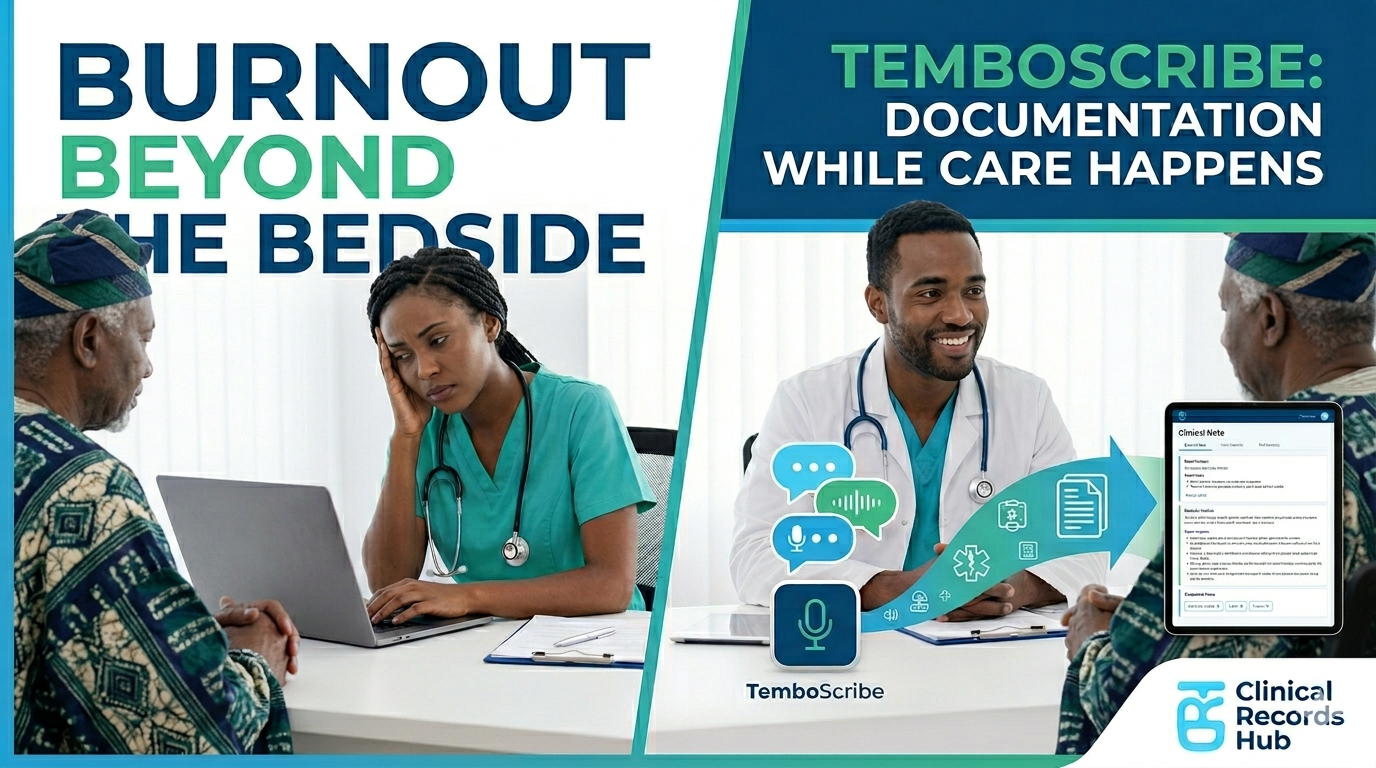
BURNOUT BEYOND THE BEDSIDE: WHEN DOCUMENTATION BECOMES EXHAUSTION
Every patient deserves the clinician’s full attention but symptoms need to be recorded, investigations need to be requested, progress notes need to be written, treatment plans need to be captured, forms need to be completed and compliance requirements need to be met. Therefore, at the…
Continue reading...
Comments