Beyond the Prescription: Why Post-Hospital Care and EMR Integration Matter

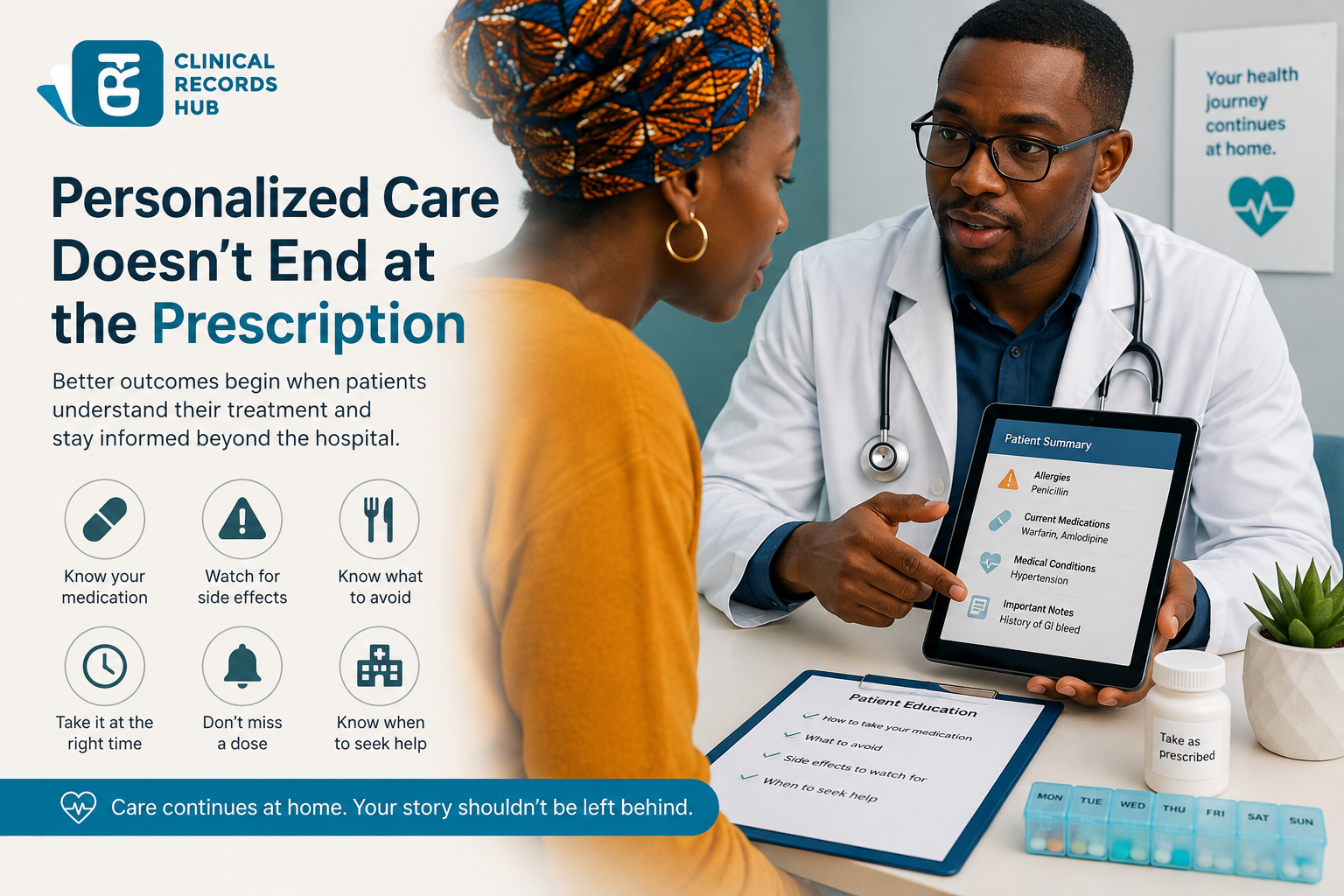
One thing is for sure: we’re all too familiar with what happens inside a hospital and everything it entails. But we’re not always as in touch with what happens after a patient walks out of it.
And frankly, that’s where many treatments can begin to fail.
An appointment and a list of prescriptions are not the end of care. They are only the beginning of a new phase; one that now depends heavily on the patient.
Just think about it:
- Did the patient understand how to take the medication?
- Do they know what foods to avoid?
- Do they know which over-the-counter drugs could be dangerous?
- Do they know which symptoms should send them back to the hospital?
- Do they know what to do if they miss a dose?
- Do they even remember the name of the medication they were prescribed?
Patient Education Is Part of Treatment
This is where personalized medicine becomes more than simply selecting the right drug.
Treatment should account for the individual taking it: their existing conditions, allergies, other medications, lifestyle, and ability to follow the instructions given to them.
A medication may be appropriate on paper, but its success ultimately depends on whether it is appropriate for that particular patient and their reality outside the hospital.
Patients should not have to memorize pharmacology. It’s not in their job description.
But they should understand the basics of the medications they are taking and, importantly, why they are taking them.
Every patient should know:
- Why they are taking a medication.
- How to take it.
- When to take it.
- What not to combine it with.
- Common side effects to watch for.
- Warning signs that require medical attention.
- What to do if they miss a dose.
Patient education shouldn’t be optional or, worse, neglected. It is a huge part of treatment.
What Patients Should Know Before Leaving the Hospital
Before leaving the hospital, patients should be given clear, understandable instructions about their treatment.
They should know what to do, and just as importantly, what not to do.
Patient Medication Don'ts
- ❌ Don't stop an antibiotic because you feel better.
- ❌ Don't mix medications without consulting a healthcare professional.
- ❌ Don't share prescription medications.
- ❌ Don't ignore drug allergies.
- ❌ Don't assume herbal supplements are always safe.
- ❌ Don't take over-the-counter medications without checking for interactions.
- ❌ Don't change your dose without medical advice.
- ❌ Don't ignore new symptoms after starting a medication.
These may sound like simple instructions, but for a patient who is worried, in pain, frightened, or simply overwhelmed, even simple information can be difficult to remember.
Why Medication Instructions Are Often Forgotten
The sad reality is that these conversations do not always happen.
There are several reasons for this:
- Clinicians are busy.
- Consultations may be short.
- Patients may be overwhelmed.
- Medical terminology can be confusing.
- Instructions may be given verbally and forgotten later.
- Important information may be scattered across different records.
A patient may nod during a consultation because they believe they understand everything, only to get home and realize they cannot remember exactly what they were told.
This isn't necessarily because patients don't care about their treatment.
Sometimes, there is simply too much information to process at once.
That is why patient education needs to be supported by the healthcare system rather than relying entirely on memory.
How Electronic Medical Records Support Personalized Care
Personalized medicine is often associated with choosing the right treatment for the right patient.
But the right treatment also has to make sense within the context of that patient's:
- Allergies
- Existing conditions
- Medication history
- Previous adverse reactions
- Diagnoses
- Lifestyle
- Ability to manage the treatment at home
This is where the information held in a Electronic Medical Record (EMR) becomes important.
When a patient's medication history, allergies, previous reactions, diagnoses, and other relevant clinical information are connected in one place, clinicians have a fuller picture to work with when making treatment decisions.
They are less likely to provide advice that ignores the rest of the patient's medical story.
The EMR doesn't make the clinical decision.
The clinician does.
The Clinician Still Matters Most
The clinician plays a crucial role in turning information into meaningful care.
They ask the questions, interpret the patient's history, explain the treatment, answer concerns, and make the final clinical decisions.
But they shouldn't have to reconstruct the patient's entire story from memory, scattered records, or whatever the patient happens to remember during a rushed consultation.
A well-organized EMR can bring relevant information to the point of care, helping the clinician identify potential concerns and have a more informed conversation with the patient.
And that conversation needs to extend beyond:
“Take this twice a day.”
Patients deserve to understand the treatment they are being asked to follow.
From the Hospital to the Patient's Home
Patients should leave knowing:
- Why they are taking a medication.
- How to take it.
- What to avoid.
- Which side effects to watch for.
- When to seek medical attention.
- What to do if something goes wrong.
An EMR can support this process by making medication information, allergies, warnings, and other patient-specific considerations easier for clinicians to access and communicate.
The technology does not replace the clinician's conversation with the patient.
It helps make that conversation more informed, consistent, and connected to the patient's medical history.
Personalized Care Should Follow the Patient Home
Ultimately, personalized care should not depend entirely on how much information a patient remembers to mention or how much a busy clinician can recall in the moment.
The healthcare system should help carry the patient's story with them.
From the consultation room to the pharmacy, and from the hospital to the patient's home, the information surrounding their treatment should remain connected.
Because care shouldn't stop at the hospital door.
The patient's true story should follow them home.
You should also read:
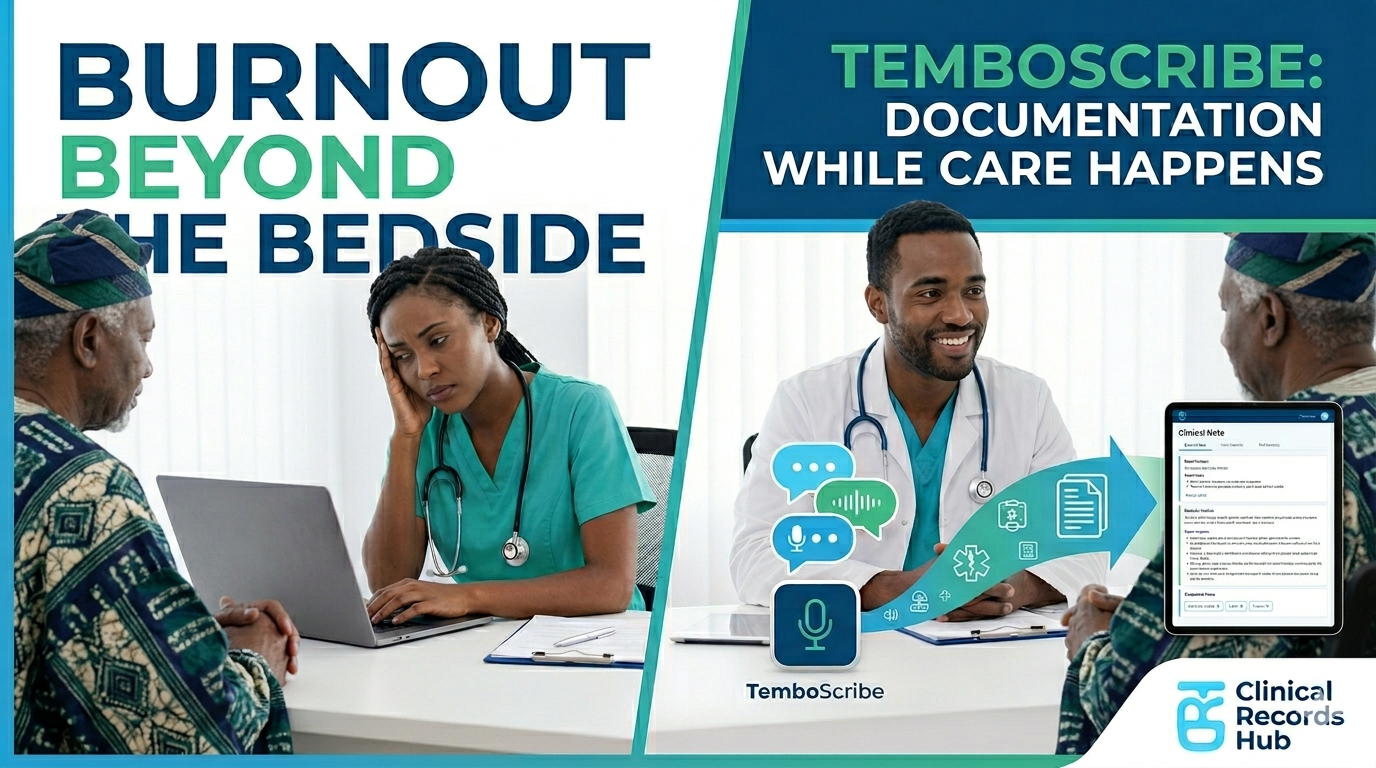
BURNOUT BEYOND THE BEDSIDE: WHEN DOCUMENTATION BECOMES EXHAUSTION
Every patient deserves the clinician’s full attention but symptoms need to be recorded, investigations need to be requested, progress notes need to be written, treatment plans need to be captured, forms need to be completed and compliance requirements need to be met. Therefore, at the…
Continue reading...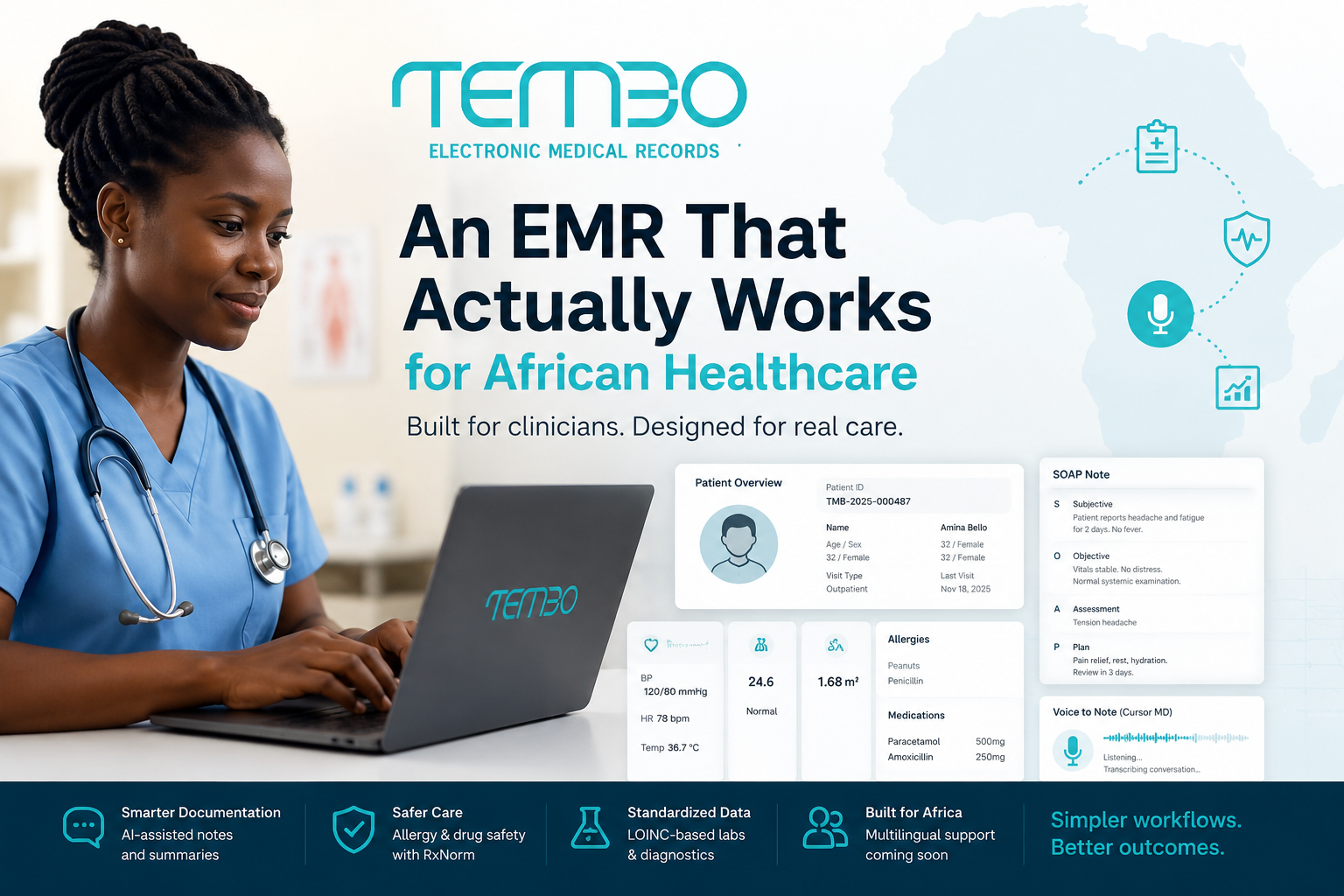
Tembo: An EMR That Actually Works for African Healthcare
For years, healthcare systems have been told that digitization is the future. Electronic Records hoping for faster workflows, safer documentation, better continuity of care, and stronger clinical coordination but as we've established in previous blog posts, instead of simplifying care, many EMRs introduced new frustrations…
Continue reading...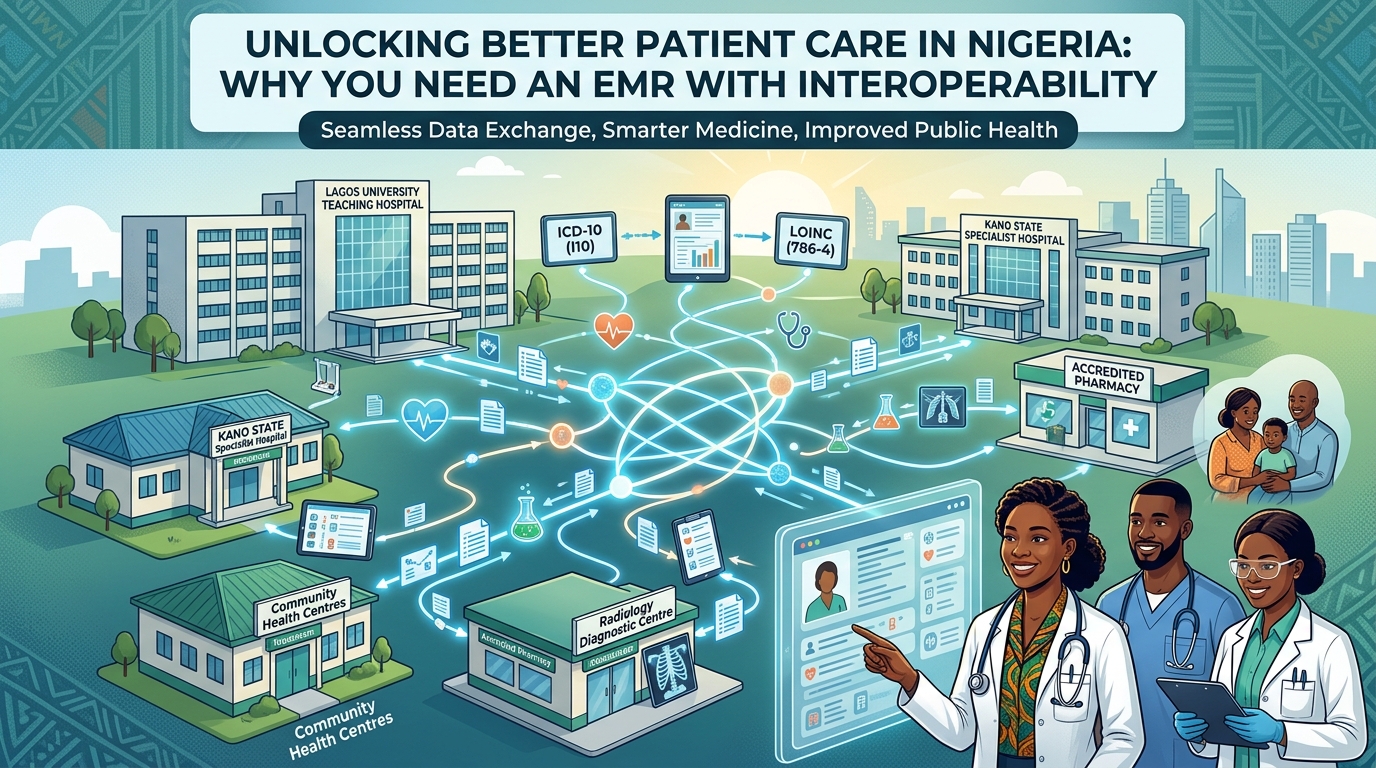
Unlocking Better Patient Care in Nigeria: Why You Need a EMR with Interoperability
The Institute of Electrical and Electronics Engineers defines interoperability as the ability of a software (or hardware) to work with other products or systems and allow for information exchange. In healthcare, this is more than just a technical feature. Instead, it is a vital tool…
Continue reading...
Comments